For centuries, society has been captivated by the idea of “talent”—a mysterious, innate gift bestowed upon a select few. We look at prodigies like Mozart or athletic phenoms and assume they were simply born different. However, modern neuroscience is rewriting this narrative, revealing a far more empowering truth: what we call talent is not a magical inheritance but the tangible result of deep practice, subconscious learning, and the brain’s incredible capacity for change.
This guide will dismantle the myth of natural talent from a scientific perspective. We will explore how the brain physically changes to acquire skills, the critical role the subconscious mind plays in achieving mastery, and how anyone can apply these principles to cultivate high-level abilities. Forget waiting for a muse; the power to build expertise is already wired into your biology.
The Neuroscience of Skill: How Your Brain Builds Talent
The foundation of skill acquisition lies not in genetics, but in neuroplasticity—the brain’s ability to reorganize itself by forming new neural connections. Every time you practice a skill, you are physically rewiring your brain’s circuitry to become more efficient at that specific task.
Neuroplasticity: Your Brain as a Dynamic System
Think of your brain as a dense network of pathways. When you first learn something, like riding a bike, the neural signals are slow and inefficient, requiring intense conscious focus. This is your brain forging a new path. With repetition, this pathway becomes stronger and more defined. This process is governed by a simple principle: “neurons that fire together, wire together.”
Myelination: The Biological Insulation for Skill
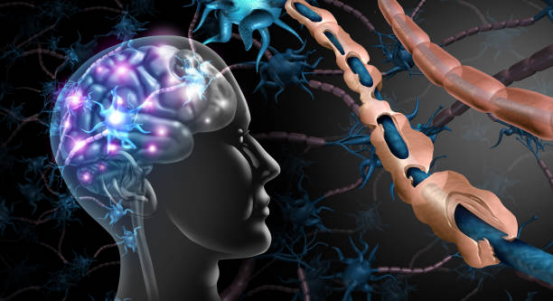
The secret to making these pathways lightning-fast is a process called myelination. Myelin is a fatty substance that wraps around nerve fibers, acting like insulation on an electrical wire. The more you practice a specific circuit, the more layers of myelin are built up. This insulation prevents signal leakage and dramatically increases the speed and accuracy of nerve impulses. This is why a practiced golf swing or a pianist’s finger movements appear so effortless—the underlying neural pathways are super-highways, heavily myelinated for peak performance. What we perceive as “natural talent” is often the result of thousands of hours of practice that have built a thick myelin sheath around specific skill circuits.
The Subconscious Mind: Your Autopilot for High Performance
While conscious effort is required to start learning, true mastery is achieved when a skill is handed off to the subconscious mind. Your conscious mind is powerful but slow and has limited bandwidth. Your subconscious, however, can process millions of bits of information per second, allowing for the fluid, automatic execution we associate with talent.
From Clumsy Effort to Automatic Execution
Remember learning to drive? Initially, every action—checking mirrors, pressing the pedals, steering—required intense concentration. After enough practice, these actions became automatic. You can now drive while holding a conversation because the entire process has been downloaded into your subconscious, specifically into brain regions like the basal ganglia, which control habits and procedural memory. This offloading of cognitive load is the ultimate goal of practice.
The Four Stages of Competence
This journey from conscious struggle to subconscious ease is perfectly described by the four stages of competence model:
- 1. Unconscious Incompetence: You don’t know what you don’t know. You are unaware of the skill and your deficiency in it.
- 2. Conscious Incompetence: You become aware of the skill and your lack of proficiency. This is the often frustrating beginning of the learning process.
- 3. Conscious Competence: You can perform the skill successfully, but it requires deliberate concentration and effort.
- 4. Unconscious Competence: You have practiced so much that the skill becomes second nature. You can perform it effortlessly, without conscious thought. This final stage is what is often mislabeled as “talent.”

A Practical Framework for Cultivating Expertise
Understanding the science is one thing; applying it is another. Cultivating “talent” is not about abstract hard work but about implementing a strategic system of practice designed to build subconscious competence. This is often referred to as “deliberate practice.”
Step 1: Deconstruct the Skill
No skill is monolithic. Break down your target ability into its smallest constituent parts. A basketball player doesn’t just “practice basketball”; they practice free throws, dribbling drills, defensive stances, and footwork separately. Isolate these micro-skills to master them individually before combining them.
Step 2: Engage in Focused, Deliberate Practice
This is not mindless repetition. Deliberate practice involves intense focus on a specific micro-skill, operating just at the edge of your current ability. It requires a constant feedback loop—you must be able to identify errors and correct them in real-time. This struggle is not a sign of failure; it’s the signal to your brain to build more myelin.
Step 3: Prioritize Consistency Over Intensity
Building myelin and strengthening neural pathways is a biological process that takes time. A consistent 30 minutes of focused practice every day is far more effective than a single 4-hour cram session once a week. Consistency is what tells your brain that this skill is important and worthy of permanent, high-speed wiring.
Mindset Shift: From Innate Talent to Acquired Skill
The most significant barrier to skill acquisition is often psychological. Believing that talent is a fixed, innate trait—a “fixed mindset”—can prevent you from putting in the work required for growth. Adopting a “growth mindset,” the belief that abilities can be developed through dedication and hard work, is essential.
Innate Talent vs. Acquired Skill Mindset
This table highlights the fundamental differences between the two mindsets and their impact on performance and learning.
| Aspect | Innate Talent Mindset (Fixed) | Acquired Skill Mindset (Growth) |
|---|---|---|
| View of Abilities | Abilities are inborn and unchangeable. | Abilities can be developed through effort and practice. |
| Response to Challenges | Avoids challenges to avoid revealing a lack of “talent.” | Embraces challenges as opportunities to learn and grow. |
| Reaction to Effort | Sees effort as a sign of weakness or lack of talent. | Views effort as the primary path to mastery. |
| Handling of Feedback | Takes criticism personally and becomes defensive. | Seeks out and learns from constructive criticism. |
| Success of Others | Feels threatened by the success of others. | Finds lessons and inspiration in the success of others. |
Frequently Asked Questions (FAQ)
- Is there any genetic component to talent at all?
- While genetics can influence physical predispositions (e.g., height in basketball) or cognitive aptitudes, they are not the determining factor in high-level skill. The overwhelming evidence from neuroscience and performance psychology shows that deliberate practice is the primary driver of expertise. Genetics might provide a starting advantage, but it is practice that builds the complex neural architecture of mastery.
- What is the difference between simple practice and deliberate practice?
- Simple practice is mindless repetition, like shooting 100 free throws while your mind wanders. Deliberate practice is highly focused and systematic. It involves setting a specific goal for each session, concentrating intensely on technique, constantly seeking feedback to identify errors, and pushing yourself just beyond your current comfort zone. It’s about quality and focus, not just quantity.
- Can you develop new talents or skills at any age?
- Absolutely. While neuroplasticity is most pronounced in childhood, the brain retains the ability to change and form new connections throughout life. Learning a new skill as an adult may take more focused effort than it does for a child, but the fundamental biological mechanisms of myelination and neural pathway formation remain active. It is never too late to learn.
- How does sleep impact skill acquisition?
- Sleep plays a critical role in consolidating memories and skills. During deep sleep, the brain replays the neural patterns of activities you practiced during the day, strengthening those connections and transferring information from short-term to long-term memory. Consistently getting quality sleep is one of the most effective ways to accelerate your learning process.