Humanity has always been defined by its relationship with time and the biological world. Today, we stand at a unique crossroads where genetic engineering allows us to look backward at extinct species, while our understanding of ancient calendars reveals how our ancestors synchronized their lives with the cosmos. This guide provides an exhaustive exploration of these two pillars of human inquiry: the technological path to de-extinction and the mathematical evolution of timekeeping.
The Science of De-Extinction: Reviving Lost Species
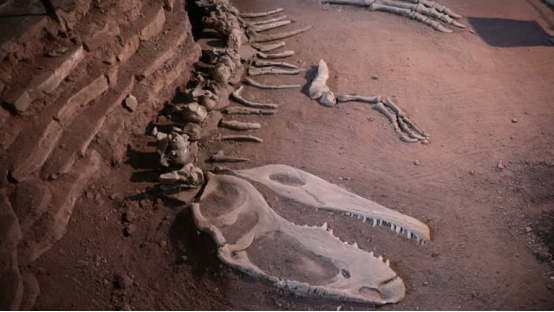
De-extinction, or resurrection biology, is no longer the stuff of science fiction. It is a rigorous scientific field focused on bringing back species that have been wiped off the face of the Earth. This process involves a sophisticated blend of molecular biology, ecology, and reproductive technology.
Genetic Engineering and the CRISPR-Cas9 Revolution
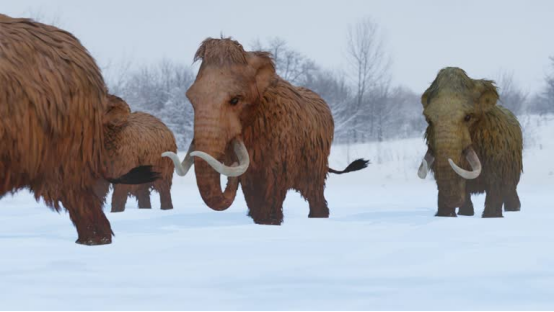
The most promising path to de-extinction involves genome editing. By using CRISPR-Cas9 technology, scientists can compare the DNA of an extinct species, such as the Woolly Mammoth, with its closest living relative, the Asian Elephant. By identifying the specific genes responsible for traits like thick fur, subcutaneous fat, and small ears, researchers can “edit” the elephant’s genome to express these ancestral characteristics.
- Precision Mapping: Scientists sequence the ancient DNA (aDNA) extracted from frozen remains.
- Functional Integration: The edited cells are tested to ensure they behave like those of the extinct organism.
- Hybridization: The result is often a hybrid—a living species modified to fill the ecological niche of its predecessor.
Somatic Cell Nuclear Transfer (SCNT)
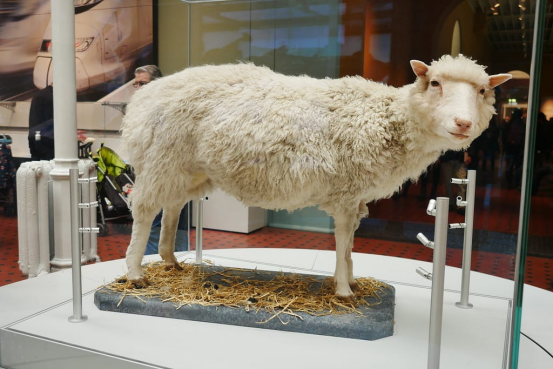
Commonly known as cloning, SCNT involves taking the nucleus of a preserved cell from an extinct animal and inserting it into an egg cell of a surrogate mother from a related species. This was famously attempted with the Pyrenean Ibex (Bucardo). While the clone only lived for a few minutes due to lung defects, it proved that the biological blueprint of an extinct animal could be reactivated.
Ethical and Ecological Consequences of Resurrection
While the technical ability to resurrect species grows, the ethical debate intensifies. De-extinction is not just about biological capability; it is about ecological responsibility and the potential for unintended consequences.
Restoring Ecosystem Balance
Proponents of de-extinction argue that certain species are “ecosystem engineers.” For instance, the Woolly Mammoth played a crucial role in maintaining the “Mammoth Steppe” by trampling snow and recycling nutrients. Their return could potentially help mitigate climate change by preventing the melting of permafrost. Similarly, the Passenger Pigeon once helped maintain forest diversity in North America through its massive migrations and nutrient-rich droppings.
The Ethical Dilemma of “Playing God”
Critics raise concerns about the welfare of resurrected animals. Would a lone Woolly Mammoth have a social structure? Would it be susceptible to modern diseases? Furthermore, there is the opportunity cost: should we spend millions of dollars bringing back the dead when thousands of living species are currently on the brink of extinction? This debate forces us to reconsider our definition of conservation in the 21st century.
Technological Frontiers in Genetic Restoration
Beyond the primary methods of cloning and editing, other strategies are being developed to restore lost biodiversity. These methods focus on utilizing the natural variation within existing gene pools.
Back-Breeding and Selective Reproduction
Back-breeding is a method where scientists selectively breed living descendants that carry high percentages of ancestral DNA. The Tauros Programme in Europe is a prime example, aiming to bring back a creature that resembles the Aurochs—the wild ancestor of modern cattle—by breeding primitive cattle breeds that still possess “wild” genetic traits. This method is slower than genetic editing but relies on natural biological processes.
Artificial Wombs and Surrogate Technology
One of the biggest hurdles in de-extinction is the gestation period. For species like the mammoth, using an Asian Elephant as a surrogate poses significant risks to the mother. Researchers are currently exploring ex-vivo (artificial) wombs to provide a controlled environment for the development of de-extinct embryos, reducing the burden on endangered living animals.

The Ancient Foundations of Time: Lunar and Solar Systems
While modern science looks to the future of biology, ancient civilizations looked to the sky to organize their existence. The development of calendars was the first great “data science” achievement of humanity, requiring centuries of observation.
The Lunar Calendar and Moon Phases
The Lunar Calendar is based on the synodic month, which is the time it takes for the moon to complete all its phases (approximately 29.53 days). Because a lunar year of 12 months totals only about 354 days, it quickly falls out of sync with the solar seasons. The Islamic Calendar (Hijri) is a pure lunar calendar, which is why its holidays, like Ramadan, rotate through different seasons over a 33-year cycle.
The Solar Calendar and Earth’s Orbit
A Solar Calendar tracks the Earth’s revolution around the sun, lasting approximately 365.2422 days. The Gregorian Calendar, which most of the world uses today, is a solar calendar. It uses “leap years” to account for the extra quarter-day each year, ensuring that the vernal equinox remains consistently around March 21st. Ancient Egyptians were among the first to perfect this, realizing that the annual flooding of the Nile coincided with the heliacal rising of the star Sirius.

The Mechanics of the Lunar New Year and Lunisolar Logic
Most ancient and traditional calendars are actually Lunisolar. These systems attempt the complex task of harmonizing the lunar months with the solar year.
The Metonic Cycle and Intercalation
To keep lunar months aligned with solar seasons, lunisolar calendars use intercalation—the addition of an extra “leap month.” The Metonic Cycle, discovered by the Greek astronomer Meton of Athens, revealed that 19 solar years are almost exactly equal to 235 lunar months. By adding seven leap months over a 19-year period, civilizations like the Babylonians and the Chinese were able to keep their calendars stable.
Comparison of Calendar Systems:
| Calendar Type | Primary Basis | Year Length (Approx.) | Adjustment Method |
|---|---|---|---|
| Solar | Earth’s Orbit | 365.25 Days | Leap Days |
| Lunar | Moon Phases | 354 Days | None (Rotates) |
| Lunisolar | Sun & Moon | 354 – 384 Days | Intercalary Months |
Mathematical Precision in Ancient Chronology
Ancient calendars were not just tools for agriculture; they were profound mathematical models of the universe. The precision achieved by early civilizations without modern computers is staggering.
The Babylonian and Mayan Achievements
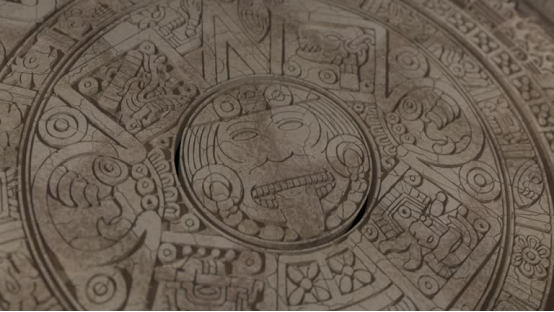
The Babylonians developed a sexagesimal (base-60) system that we still use to measure time and angles. Their ability to predict eclipses and planetary movements allowed them to create highly accurate lunisolar tables. Meanwhile, the Mayans in Mesoamerica developed the Long Count calendar, which tracked time over thousands of years with a precision that rivals modern atomic clocks, accounting for cycles far longer than a single human lifetime.
The Chinese Lunar New Year
The Chinese Calendar (Nongli) is a sophisticated lunisolar system that divides the year into 24 solar terms based on the sun’s longitude. This ensures that the Lunar New Year always falls on the second new moon after the winter solstice. This system was vital for an agrarian society, as it dictated the exact timing for planting and harvesting, blending astronomical observation with practical survival.
The Intersection of Biological Rhythms and Celestial Cycles
The study of de-extinction and ancient calendars converges in the field of chronobiology. All life on Earth has evolved to respond to the cycles of the sun and moon.
Circadian and Circalunar Rhythms
Most organisms possess a circadian rhythm, an internal clock that follows a 24-hour cycle. However, many marine species also possess circalunar rhythms, synchronizing their reproduction with the tides and moon phases. When scientists consider de-extinction, they must ensure that the resurrected species’ internal clocks are still compatible with the modern day-night cycles and seasonal shifts of their intended habitats.
Evolutionary Adaptation to Deep Time
Extinct species were perfectly adapted to the astronomical cycles of their era. For example, species living during the Pleistocene had to survive extreme seasonal variations. If we bring these animals back today, we must account for how Milankovitch cycles (long-term shifts in Earth’s orbit) have changed the climate since their extinction. The calendar of the past may not perfectly match the climate of the present.
Future Directions: Integrating Modern Science with Deep Time
As we move forward, the integration of genetic data and historical timekeeping will continue to expand our understanding of life’s resilience. The same precision we use to map the genome is being used to decode ancient astronomical texts.
The Role of AI in Synthesis
Artificial Intelligence is now being used to reconstruct fragmented ancient DNA and to decipher lost calendar systems. By analyzing thousands of years of astronomical data, AI can help us understand how ancient civilizations adapted to sudden climate shifts—knowledge that is invaluable as we face our own environmental challenges. Similarly, AI assists in protein folding simulations for de-extinct species, predicting how their biology will function before they are even born.
A New Paradigm for Conservation
Ultimately, de-extinction and the study of ancient timekeeping teach us that “the past is never dead.” By mastering the tools of the future (CRISPR, AI) and the wisdom of the past (Ancient Calendars), humanity can create a more resilient and biologically diverse world. We are no longer just observers of time and life; we are their active architects.
Frequently Asked Questions (FAQ)
- Q1: Is it possible to bring back dinosaurs using de-extinction technology?
- Currently, it is highly unlikely. DNA has a half-life of about 521 years, meaning it completely degrades after approximately 6.8 million years. Since dinosaurs went extinct 66 million years ago, their original DNA is gone. De-extinction efforts are currently limited to more recently extinct species like the Mammoth or Thylacine.
- Q2: Why does the date of the Lunar New Year change every year?
- The Lunar New Year is based on a lunisolar calendar. Because 12 lunar months are shorter than a solar year, the date shifts backward by about 11 days each year. To prevent it from moving through all seasons, a leap month is added roughly every three years to “reset” the calendar.
- Q3: What is the main difference between cloning and genome editing in de-extinction?
- Cloning (SCNT) requires a complete, intact nucleus from a preserved cell to create an exact genetic copy. Genome editing (CRISPR) involves taking a living relative’s DNA and changing specific parts of it to match the extinct species, resulting in a hybrid organism with ancestral traits.
- Q4: How did ancient people know when to add a leap month?
- Ancient astronomers observed the “Metonic Cycle,” realizing that 19 years of solar cycles equaled 235 lunar months. They also used “solar terms”—marking the solstices and equinoxes—to determine if the lunar months were falling too far out of alignment with the sun.
- Q5: What are the biggest risks of de-extinction?
- The primary risks include ecological disruption (the resurrected species becoming invasive), the potential transmission of ancient or new diseases, and the ethical concern of creating animals that have no social group or suitable habitat in the modern world.