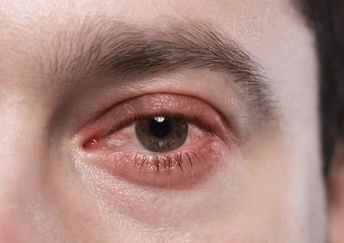
Red, itchy, and sensitive eyes, commonly known as conjunctivitis or “pink eye,” can be a frustrating and uncomfortable condition. While modern medicine offers effective solutions like antibiotic or antihistamine eye drops, these often focus on managing symptoms rather than addressing the underlying cause. Traditional Chinese Medicine (TCM) provides a different lens, viewing eye problems not as isolated issues, but as external manifestations of a deeper internal imbalance. This comprehensive guide will explore the TCM approach to healing conjunctivitis, offering a holistic path to not only relieve symptoms like redness and dryness but also restore overall wellness and prevent recurrence. We will delve into the ancient principles, powerful treatment modalities, and practical dietary advice that make TCM a gentle yet profound alternative for eye health.
Understanding Conjunctivitis: Western vs. TCM Perspectives
To appreciate the unique value of TCM, it’s crucial to understand how its diagnostic framework differs from the Western medical model. Both systems aim to restore health, but their approaches to understanding the “why” behind the disease are fundamentally different.
The Western View: Identifying the External Pathogen
In Western medicine, conjunctivitis is defined as the inflammation of the conjunctiva, the thin membrane covering the white part of the eye and the inner surface of the eyelids. The diagnosis focuses on identifying the external cause, which typically falls into one of three categories:
- Viral Conjunctivitis: Highly contagious, often associated with the common cold. It usually produces a watery discharge.
- Bacterial Conjunctivitis: Also contagious, characterized by a thicker, yellow or green discharge.
- Allergic Conjunctivitis: Triggered by allergens like pollen or dust mites, causing intense itching, tearing, and swelling.
Treatment is directed at the specific cause—antiviral medications (though most viral cases resolve on their own), antibiotics for bacterial infections, and antihistamines for allergies.
The TCM Diagnosis: Decoding Internal Imbalance
TCM views the eyes as being intrinsically connected to the body’s internal organ systems, particularly the Liver. The famous TCM saying, “The Liver opens into the eyes,” means that the health of the Liver’s Qi (vital energy) and Blood directly impacts eye function. Therefore, red, dry, and sensitive eyes are seen as a symptom of a deeper disharmony, most commonly:
- Wind-Heat Invasion: This pattern is similar to an acute infection in Western medicine. An external pathogenic factor (Wind-Heat) attacks the body, manifesting as sudden onset redness, swelling, a gritty sensation, and possibly a thin, yellow discharge.
- Liver Fire Blazing Upwards: This pattern relates to chronic stress, anger, frustration, or a diet rich in spicy, greasy foods. The excess heat from the Liver channel rises to the head and eyes, causing intense redness, a burning sensation, dryness, light sensitivity, and possibly headaches or irritability.
TCM treatment is therefore not just about the eyes; it’s about clearing the Wind-Heat or calming the Liver Fire to resolve the problem at its source.

Core TCM Treatments for Healing Conjunctivitis
A licensed TCM practitioner will use a combination of therapies tailored to the individual’s specific pattern of imbalance. The goal is to expel pathogens, clear heat, nourish the eyes, and restore harmony to the Liver system.
Acupuncture: Unblocking Qi for Clearer Vision
Acupuncture involves inserting fine, sterile needles into specific points on the body to regulate the flow of Qi and Blood. For eye conditions, points are chosen both locally around the eyes and distally on the body to address the root cause.
- Local Points: ST1 (Chengqi), BL1 (Jingming), and BL2 (Zanzhu) are located around the eye socket. They are used to directly increase circulation, reduce inflammation, and relieve pressure in the eyes.
- Distal Points for Wind-Heat: LI4 (Hegu) and LI11 (Quchi) are powerful points on the Large Intestine channel known for their ability to clear heat and release the exterior, making them essential for acute, infection-like symptoms.
- Distal Points for Liver Fire: LIV2 (Xingjian) is a primary point on the Liver channel used to drain fire and cool the system. GB20 (Fengchi) at the base of the skull helps to clear wind and heat from the head and benefit the eyes.
Herbal Medicine: Nature’s Prescription for Eye Health
Chinese herbal formulas are sophisticated combinations of plants, minerals, and other natural substances that work synergistically. For conjunctivitis, formulas are chosen to clear heat and detoxify.
- Yin Qiao San (Honeysuckle and Forsythia Powder): A classic formula for early-stage Wind-Heat invasion, excellent for symptoms that accompany a common cold, like sore throat and fever.
- Sang Ju Yin (Mulberry Leaf and Chrysanthemum Drink): Specifically targets Wind-Heat affecting the head and eyes. Chrysanthemum flower (Ju Hua) is famous in TCM for its ability to clear Liver heat and brighten the eyes.
Dietary Therapy: Cooling the Fire from Within
In TCM, food is medicine. During an episode of conjunctivitis, dietary adjustments are critical to avoid adding more “heat” to the body. A practitioner will advise avoiding inflammatory foods and incorporating cooling ones.
Pro Tips: Integrating TCM for Optimal Eye Wellness
Beyond professional treatment, you can incorporate TCM principles into your daily life to support eye health and prevent future flare-ups. This is especially useful for those who suffer from chronic dry eyes or recurrent issues.
Daily Acupressure Routine
Gently massage these points for 1-2 minutes each day to promote circulation and relieve eye strain:
- BL2 (Zanzhu): In the depressions at the inner end of your eyebrows.
- LI4 (Hegu): In the fleshy webbing between your thumb and index finger. (Avoid during pregnancy).
- GB20 (Fengchi): In the hollows at the base of your skull, where the neck muscles attach.
TCM vs. Western Medicine: A Comparison
Understanding when to use each approach is key to effective care.
| Aspect | Western Medicine | Traditional Chinese Medicine (TCM) |
|---|---|---|
| Focus | Symptom management & pathogen elimination | Addressing the root internal imbalance |
| Diagnosis | Identifies external cause (virus, bacteria, allergen) | Identifies internal pattern (Wind-Heat, Liver Fire) |
| Treatment | Targeted medications (antibiotics, antihistamines) | Holistic therapies (acupuncture, herbs, diet) |
| Best For | Severe bacterial infections, acute allergic reactions | Chronic conditions, recurrent issues, complementing Western care |
Frequently Asked Questions (FAQ)
- Is acupuncture for the eyes safe and painful?
- When performed by a licensed and experienced acupuncturist, it is extremely safe. The needles used are hair-thin, and while points directly around the eye are treated with utmost care, many of the most powerful points are located elsewhere on the body, such as the hands and feet. Patients typically report a mild, dull ache or no sensation at all, not sharp pain.
- How long does it take to see results with TCM for conjunctivitis?
- For acute conditions like a Wind-Heat type of conjunctivitis, patients often experience significant relief within just a few sessions of acupuncture and a few days of herbal medicine. For chronic conditions rooted in a deeper imbalance like Liver Fire, a longer course of treatment over several weeks may be necessary to address the underlying cause and prevent recurrence.
- Can TCM help with chronic dry eyes or computer-related eye strain?
- Absolutely. These conditions are often diagnosed in TCM as Liver Blood or Yin Deficiency, where the eyes are not receiving enough nourishment and moisture. TCM is exceptionally effective for this, using acupuncture, specific nourishing herbs, and dietary therapy to rebuild the body’s fluids and improve circulation to the eyes, offering long-term relief that eye drops alone cannot provide.
- What is the most important lifestyle change for eye health according to TCM?
- Besides diet, managing emotional stress is paramount. The Liver is the organ most affected by stress, anger, and frustration. When the Liver Qi becomes stagnant or overheated from these emotions, it directly impacts the eyes. Practices like meditation, deep breathing, regular exercise, and ensuring adequate sleep are crucial for keeping the Liver functioning smoothly and, by extension, keeping your eyes clear and comfortable.