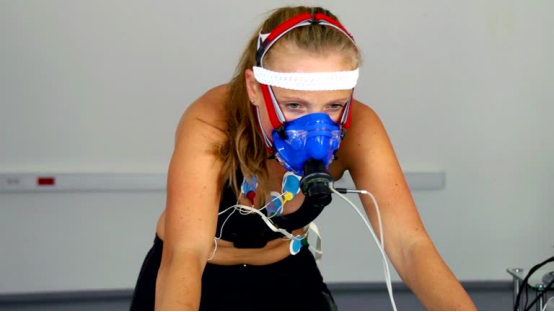
The VO2 Max Advantage: Why Aerobic Capacity is the Gold Standard for Longevity
VO2 max, or maximal oxygen consumption, represents the absolute limit of the body’s ability to transport and utilize oxygen during intense physical exertion. It is not merely a metric for elite athletes; it is arguably the most potent clinical marker for predicting all-cause mortality. Research consistently demonstrates that individuals in the lowest quartile of cardiorespiratory fitness face a significantly higher risk of premature death compared to those in the highest quartile.
The Physiology of Oxygen Utilization
At the cellular level, VO2 max reflects the efficiency of the pulmonary, cardiovascular, and muscular systems working in concert. When you train to increase your VO2 max, you are effectively upgrading your mitochondria—the powerhouses of your cells. This improvement allows your body to handle higher metabolic demands with less oxidative stress.
- Cardiac Output: Enhanced stroke volume allows the heart to pump more oxygenated blood per beat.
- Capillarization: Increased density of capillaries around muscle fibers improves oxygen diffusion.
- Mitochondrial Density: Greater efficiency in converting oxygen and substrates into ATP.

The Pathophysiology of Sedentary Living: How Inactivity Degrades Human Systems
Modern society has engineered movement out of daily life, leading to a phenomenon often termed “sedentary death syndrome.” When the human body remains in a static state for prolonged periods, the physiological cost is not just a loss of fitness, but a fundamental alteration in metabolic signaling that accelerates biological aging.
Metabolic Consequences of Prolonged Inactivity
Inactivity triggers a cascade of negative physiological events. Without the mechanical stress of movement, the body begins to downregulate processes that are essential for metabolic homeostasis. This leads to insulin resistance, systemic inflammation, and the atrophy of oxidative muscle fibers.
| System | Impact of Inactivity | Long-term Consequence |
|---|---|---|
| Endocrine | Reduced GLUT4 translocation | Type 2 Diabetes / Insulin Resistance |
| Cardiovascular | Reduced arterial elasticity | Hypertension and endothelial dysfunction |
| Musculoskeletal | Type I fiber atrophy | Sarcopenia and reduced metabolic rate |

Strategies for Reversing Physiological Decline
The good news is that the human body remains remarkably plastic well into later life. By implementing targeted aerobic interventions and breaking the cycle of sedentary behavior, it is possible to reclaim lost VO2 max and mitigate the risks associated with chronic inactivity.
Implementing Aerobic Overload
To improve VO2 max, one must engage in training that approaches the maximal aerobic threshold. This is not achieved through casual walking; it requires structured intensity. High-Intensity Interval Training (HIIT) is the most effective modality for rapidly increasing oxygen utilization efficiency.
- Zone 2 Training: Build the aerobic base through steady-state, low-intensity movement that promotes mitochondrial biogenesis.
- VO2 Max Intervals: Short bursts of high-intensity effort (e.g., 4 minutes at 90-95% max heart rate) followed by active recovery.
- Movement Snacking: Disrupting sedentary blocks every 60 minutes with brief bouts of movement to maintain insulin sensitivity.
The Future of Longevity Medicine
Longevity is no longer a passive pursuit; it is an active, data-driven discipline. By monitoring VO2 max as a primary health metric and actively countering the physiological decay caused by sedentary behavior, individuals can significantly increase their “healthspan”—the period of life spent in good health, free from chronic disease.
Frequently Asked Questions (FAQ)
- Q1: What is considered a “good” VO2 max for my age?
- VO2 max is highly dependent on age and biological sex. Generally, being in the top 25% of your age-matched cohort is associated with a dramatic reduction in all-cause mortality. It is recommended to consult normative data tables based on your specific demographic.
- Q2: How does sedentary behavior cause insulin resistance?
- When muscles are inactive, they become less efficient at absorbing glucose from the bloodstream. This forces the pancreas to produce more insulin. Over time, this chronic hyperinsulinemia leads to cellular resistance, which is a precursor to metabolic syndrome.
- Q3: Can I improve my VO2 max if I am over 60?
- Absolutely. While the rate of improvement may differ from younger individuals, the cardiovascular system retains its plasticity. Structured aerobic training has been shown to significantly improve VO2 max and arterial function in older adults.
- Q4: How often should I perform high-intensity intervals?
- For most individuals, performing high-intensity VO2 max intervals 1 to 2 times per week is sufficient to drive adaptation without overstressing the central nervous system or joints. The remainder of your training should focus on lower-intensity, volume-based aerobic work.