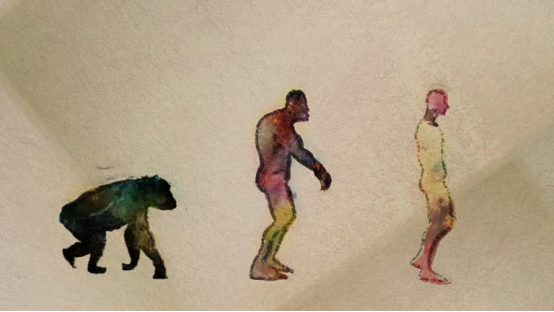
The Grand Tapestry of Human Evolution: An Overview
Human evolution is not merely a historical account of our species but a vibrant, ongoing narrative woven through billions of years of life on Earth. It encompasses the biological and cultural development of hominins, leading to the emergence of anatomically modern humans, Homo sapiens. This intricate process is evidenced by a wealth of fossil records, genetic data, comparative anatomy, and archaeological discoveries, all painting a compelling picture of our journey from simple organisms to complex, self-aware beings. Understanding this grand tapestry is crucial for comprehending our place in the natural world, our physiological peculiarities, and the potential trajectory of our future.
Defining Human Evolution: A Multidisciplinary Perspective
Human evolution, at its core, refers to the evolutionary process that led to the appearance of modern humans. It is a subset of the broader field of evolutionary biology, specifically focusing on the lineage that diverged from our common ancestor with chimpanzees. This definition extends beyond mere physical changes, integrating aspects of:
- Biological Evolution: Changes in genetic makeup, anatomical structures, and physiological functions over generations. This includes brain size expansion, bipedalism, and dental changes.
- Behavioral Evolution: The development of complex social structures, communication methods, tool use, and survival strategies.
- Cultural Evolution: The transmission of knowledge, ideas, customs, and technologies across generations, which has profoundly influenced our biological trajectory.
These dimensions are not isolated but are deeply intertwined, with cultural and behavioral innovations often driving biological adaptations, and vice-versa. For instance, the development of cooking tools and fire led to changes in diet and jaw structure, simultaneously influencing brain development.
Key Evolutionary Forces Shaping Humanity
The evolutionary journey of humanity has been sculpted by fundamental forces that drive change in all living organisms. These mechanisms operate at the genetic level, influencing traits that are passed down through generations:
- Natural Selection: This is the cornerstone of evolutionary theory. Individuals with traits better suited to their environment are more likely to survive, reproduce, and pass on those advantageous traits. For early hominins, adaptations like bipedalism (walking on two legs) offered advantages in savanna environments, such as better visibility for predators or more efficient long-distance travel, leading to their prevalence.
- Genetic Drift: Random fluctuations in the frequency of gene variants (alleles) in a population. This effect is more pronounced in small populations. Events like the “bottleneck effect” (a drastic reduction in population size) or the “founder effect” (a new population established by a small number of individuals) can lead to significant shifts in allele frequencies that are not necessarily adaptive.
- Gene Flow: The transfer of genetic material from one population to another, typically through migration and interbreeding. Gene flow can introduce new genetic variations into a population or alter existing allele frequencies, reducing genetic differences between populations. Evidence of interbreeding between early modern humans and Neanderthals is a prime example of gene flow.
- Mutation: The ultimate source of all new genetic variation. Mutations are random changes in the DNA sequence. While many mutations are neutral or harmful, some can be beneficial, providing the raw material upon which natural selection can act. For example, mutations leading to changes in brain development or immune response have been critical in human evolution.
These forces, acting in concert over vast stretches of time, have meticulously sculpted the human form and mind, guiding us from our primate ancestors to the species we are today.

Vestigial Organs and Relict Features: Echoes of Our Past
One of the most compelling lines of evidence for human evolution lies within our own bodies: the presence of vestigial organs and relict features. These are anatomical structures or behaviors that have lost most or all of their original function through evolution. Far from being biological errors, they are fascinating remnants, silent witnesses to our ancestral past, illustrating the gradual adaptation of species over millions of years. Their existence underscores that organisms are not perfectly designed but are products of a long history of modifications, compromises, and evolutionary tinkering.
Defining Vestigial Structures and Their Evolutionary Context
A vestigial structure is an anatomical feature or behavior that was once useful in an organism’s ancestor but has since lost its original or primary function. The term “relict feature” is often used interchangeably or to describe broader ancestral traits. These structures persist because they are either not harmful enough to be selected against, or they have acquired a minor, secondary function. They are crucial for evolutionary biology because they demonstrate:
- Descent with Modification: Organisms inherit traits from their ancestors, even if those traits are no longer optimal or fully functional.
- Common Ancestry: Similar vestigial structures in different species can indicate a shared evolutionary history.
- Evolutionary Change: The reduction or loss of a feature over time highlights that evolution is an ongoing process, adapting organisms to changing environments.
The human body is replete with such examples, offering a biological archive of our evolutionary journey.
Prominent Examples in the Human Body
Numerous structures within the human anatomy serve as living testaments to our evolutionary lineage. Here are some of the most well-known examples:
- The Appendix: This small, finger-shaped pouch projecting from the large intestine is perhaps the most famous human vestigial organ. In our herbivorous ancestors, it likely played a role in digesting cellulose from plant matter, similar to the cecum in many modern herbivores. In humans, its primary digestive function is lost, although some theories suggest minor immunological roles or as a “safe house” for gut bacteria. However, its inflammation (appendicitis) can be life-threatening, making its removal a common surgical procedure without significant long-term health impacts.
- Wisdom Teeth (Third Molars): These are the last molars to erupt, typically in late adolescence or early adulthood. Our early hominin ancestors had larger jaws and coarser diets requiring more grinding power. As human diets became softer with the advent of cooking and tool use, and jaw size reduced, wisdom teeth often become impacted, causing pain and requiring extraction. This misalignment between jaw size and tooth eruption pattern is a clear relict feature.
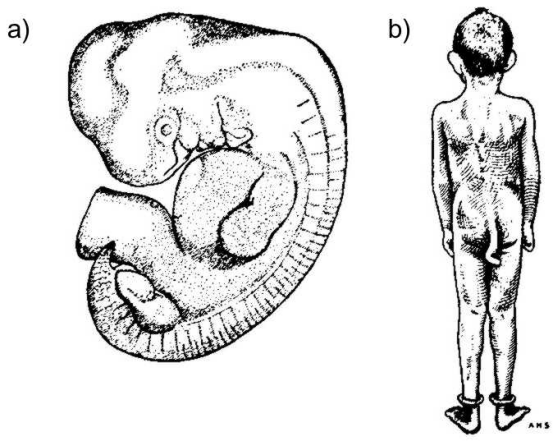
- The Coccyx (Tailbone): Located at the base of the spine, the coccyx is a fused remnant of the tails found in most other vertebrates. While it no longer serves as a balancing or communicative appendage, it still provides attachment points for several muscles, tendons, and ligaments. Its presence is a direct indicator of our primate ancestry, where a tail was a functional necessity for balance and locomotion.
- Plica Semilunaris (Third Eyelid): In the inner corner of the human eye, a small fold of conjunctiva, the plica semilunaris, is visible. This is homologous to the nictitating membrane, a transparent or translucent third eyelid found in many birds, reptiles, and some mammals, used for protection and moistening the eye while maintaining vision. In humans, it is greatly reduced and has no functional role.
- Auricular Muscles (Ear Wiggling Muscles): While most humans cannot consciously wiggle their ears, the small extrinsic auricular muscles around the ear are remnants of muscles that allow many mammals to swivel their ears to detect sounds. Their presence, even in a non-functional state, points to a time when directional hearing was a critical survival trait for our ancestors.
- Arrector Pili Muscles (Goosebumps): These tiny muscles attach to hair follicles. When they contract, they make body hair stand on end, causing “goosebumps.” In furry animals, this action traps a layer of air for insulation or makes the animal appear larger to predators. With our significantly reduced body hair, the insulating effect is negligible, making goosebumps primarily a reflex response to cold or emotion, rather than a significant thermoregulatory or defensive mechanism.
- Male Nipples: Both male and female embryos develop nipples before sexual differentiation occurs. In females, these structures become functional for lactation, while in males, they remain in a vestigial state, serving no known biological purpose. Their existence in males is a clear example of developmental homology and a reminder of a shared embryonic blueprint.
The Significance of Vestigial Structures in Evolutionary Biology
The study of vestigial organs and relict features provides powerful, tangible evidence for the theory of evolution. They are not merely curiosities but critical data points that:
- Support Common Descent: The presence of similar vestigial structures across different species helps trace common ancestry. For example, the coccyx links humans to other tailed primates.
- Demonstrate Evolutionary Adaptation: They show how organisms adapt to new environments by modifying or losing traits that are no longer beneficial, rather than starting from scratch. Evolution is a process of modification of existing structures.
- Refute Intelligent Design Arguments: The imperfections and redundancies represented by vestigial organs are difficult to reconcile with the idea of a perfectly designed organism, instead aligning with the opportunistic nature of natural selection.
These evolutionary echoes within our anatomy offer a profound connection to our deep past, reminding us that we are part of a continuous, ever-changing lineage.
The Human Evolutionary Timeline: Key Milestones and Ancestors
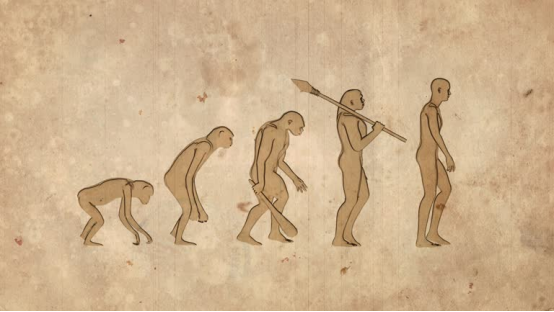
The story of human evolution is a vast and complex saga spanning millions of years, marked by pivotal adaptations and the emergence of diverse hominin species. This timeline is not a linear progression but a branching bush, with various species coexisting and competing, some leading to modern humans, others fading into extinction. Understanding this chronology is fundamental to grasping the gradual accumulation of traits that define our species, from upright walking to complex cognitive abilities.
Early Hominins and the Dawn of Bipedalism
The earliest ancestors in the human lineage, known as hominins, began to emerge in Africa millions of years ago, differentiating from the lineage that would lead to chimpanzees. A defining characteristic of these early hominins was bipedalism—the ability to walk habitually on two legs. This adaptation is considered one of the most significant shifts in human evolution.
- Sahelanthropus tchadensis (approx. 7-6 million years ago): Considered by some to be the earliest known hominin, discovered in Chad. Its skull features suggest an upright posture, though full bipedalism is debated.
- Ardipithecus (approx. 5.8-4.4 million years ago): Species like Ardipithecus ramidus (“Ardi”) from Ethiopia show a mosaic of ape-like and human-like features, indicating a transitional form that could walk upright on the ground but still climbed trees effectively.
- Australopithecus (approx. 4-2 million years ago): This genus includes several well-known species, such as Australopithecus afarensis (famously represented by “Lucy”). These hominins were undoubtedly bipedal, as evidenced by skeletal remains and fossilized footprints (Laetoli footprints). They had relatively small brains, large teeth, and ape-like faces, but their pelvis and leg bones were clearly adapted for upright walking.
The shift to bipedalism offered numerous advantages in the changing African environments, which were becoming drier and more open: better visibility for spotting predators or food, more efficient long-distance travel, and freeing the hands for carrying food or offspring, and eventually, for tool-making.
The Rise of the Homo Genus: Tools, Fire, and Migration
Around 2.8 million years ago, a new genus emerged, characterized by larger brains, smaller teeth, and a greater reliance on tool use: Homo.
- Homo habilis (“Handy Man,” approx. 2.4-1.4 million years ago): The earliest known species of the Homo genus, associated with the Oldowan stone tool industry. While still relatively small-brained compared to later Homo species, their capacity for tool-making represented a significant cognitive leap.
- Homo erectus (“Upright Man,” approx. 1.9 million – 140,000 years ago): A highly successful and widespread species. Homo erectus was the first hominin to migrate out of Africa, reaching Asia and Europe. They had larger brains than H. habilis, used more sophisticated Acheulean tools (handaxes), and are strongly associated with the controlled use of fire, which provided warmth, protection, and enabled cooking, leading to dietary changes and further brain development.
- Homo neanderthalensis (Neanderthals, approx. 400,000 – 40,000 years ago): A robust species adapted to cold climates, primarily found in Europe and parts of Asia. Neanderthals possessed large brains (comparable to or even larger than modern humans), complex tool technologies (Mousterian), buried their dead, and likely had some form of symbolic thought. Genetic evidence shows that modern humans interbred with Neanderthals, leaving a small percentage of Neanderthal DNA in non-African populations.
The Emergence of Homo Sapiens: Cognition and Global Expansion
Our own species, Homo sapiens, originated in Africa and represents the culmination of millions of years of hominin evolution.
- Origins in Africa (approx. 300,000 years ago): The earliest fossil evidence for anatomically modern humans comes from sites in Morocco and Ethiopia. Early Homo sapiens developed increasingly sophisticated tools, including blade technologies, and engaged in symbolic behaviors such as creating art and ornaments.
- Out of Africa Theory: Around 60,000-70,000 years ago, a relatively small group of Homo sapiens began to migrate out of Africa, spreading across the globe and eventually replacing other hominin species like Neanderthals and Denisovans. This expansion was facilitated by their adaptability, advanced cognitive abilities, and capacity for complex cultural innovation.
- Cognitive Revolution: This period saw a dramatic acceleration in human innovation, characterized by the development of language, abstract thought, symbolic art, and complex social structures. This “revolution” allowed Homo sapiens to adapt to virtually any environment and establish dominance across the planet.
The journey of Homo sapiens is a testament to the power of adaptation, innovation, and the complex interplay of biological and cultural evolution.
Comparative Overview of Key Hominin Species
To summarize the major milestones, the following table highlights key characteristics of prominent hominin species, illustrating the progressive changes over time:
| Species | Approximate Time Range (MYA) | Key Characteristics | Brain Size (cc) | Notable Achievements/Features |
|---|---|---|---|---|
| Sahelanthropus tchadensis | 7-6 | Possible bipedalism, small brain, ape-like features | ~350 | Earliest potential hominin |
| Australopithecus afarensis | 3.9-2.9 | Definite bipedalism, small brain, large molars | ~430 | “Lucy” fossil, Laetoli footprints |
| Homo habilis | 2.4-1.4 | Increased brain size, first stone tool user | ~600 | Oldowan tool industry |
| Homo erectus | 1.9-0.14 | Larger brain, first out of Africa, controlled fire | ~900 | Acheulean tools, widespread migration |
| Homo neanderthalensis | 0.4-0.04 | Large brain, robust build, adapted to cold | ~1500 | Mousterian tools, burial rituals, interbred with H. sapiens |
| Homo sapiens | 0.3-Present | Largest brain relative to body, complex language, symbolic thought | ~1350 | Global distribution, cognitive revolution, advanced culture |
The Mystery of Human Hair: A Unique Evolutionary Adaptation
Among the many distinctive features of Homo sapiens, our relatively sparse body hair and prominent scalp hair stand out as a unique evolutionary paradox. Most mammals are covered in a dense coat of fur for insulation and protection, yet humans are often referred to as “naked apes.” This significant reduction in body hair, coupled with the retention and even growth of long hair on the scalp, eyebrows, and eyelashes, speaks to a complex interplay of environmental pressures, physiological adaptations, and sexual selection throughout our evolutionary history. Unraveling the mystery of human hair provides profound insights into how our ancestors survived and thrived.
Theories Behind Scalp Hair Retention and Its Functions
While the rest of the human body lost much of its dense fur, the hair on our heads evolved to be particularly long and thick. This seemingly counterintuitive development, especially in species originating in hot African environments, has led to several compelling theories:
- Thermoregulation and Sun Protection for the Brain: The most widely accepted theory suggests that scalp hair acts as a natural sun shield, protecting the brain from intense solar radiation in open, equatorial environments. A dense thatch of hair can reduce the heat load on the scalp and brain, preventing overheating and potential damage. Conversely, it can also provide some insulation against heat loss in colder conditions, although its primary role is thought to be protection from direct sun.
- Sexual Selection: Long, healthy hair might have served as an indicator of fitness, health, and youth, making individuals more attractive to potential mates. This could have driven the selection for longer, more robust scalp hair, as it signaled good nutrition and genetic quality.
- Protection from Physical Trauma: A thick layer of hair can offer a degree of cushioning against minor head injuries, acting as a natural helmet against scrapes or impacts.
These functions highlight that scalp hair is not a vestigial feature but an actively maintained and perhaps enhanced adaptation critical for human survival and reproduction.
Body Hair Reduction and Its Evolutionary Advantages
The significant reduction in body hair across most of the human body, compared to our primate relatives, is a more dramatic evolutionary shift. This “nakedness” is believed to have conferred several crucial advantages, particularly in the hot, open savannas where early hominins evolved:
- Enhanced Sweating for Cooling (Persistence Hunting): One of the strongest theories posits that reduced body hair allowed for more efficient evaporative cooling through sweating. Humans have a high density of eccrine sweat glands, which produce watery sweat directly onto the skin surface. Without a thick fur coat to trap heat and moisture, this sweat can evaporate rapidly, cooling the body. This adaptation would have been invaluable for persistence hunting, where early humans would track and exhaust prey over long distances in the heat of the day.
- Reduced Parasite Load: Less body hair means fewer places for external parasites (like fleas, ticks, and lice) to live and breed. This would have significantly reduced the burden of disease and irritation, contributing to better health and survival rates. While scalp hair still provides a habitat for head lice, the overall reduction in body hair was a net benefit.
- Aquatic Ape Hypothesis (Debated): A less widely accepted theory suggests that human hairlessness evolved during a semi-aquatic phase of human evolution. In aquatic environments, dense fur can become waterlogged and heavy, hindering movement. While intriguing, this hypothesis lacks substantial fossil evidence.
- Social Signaling and Reduced Sexual Dimorphism: The absence of dense fur may have also facilitated more direct visual cues for social and sexual signaling, as skin color, scars, and other body features became more prominent.
The combination of efficient sweating and reduced parasite load likely provided a powerful selective advantage for early humans, enabling them to exploit new ecological niches and outcompete other species.