The Mechanics of Pareidolia and Pattern Recognition
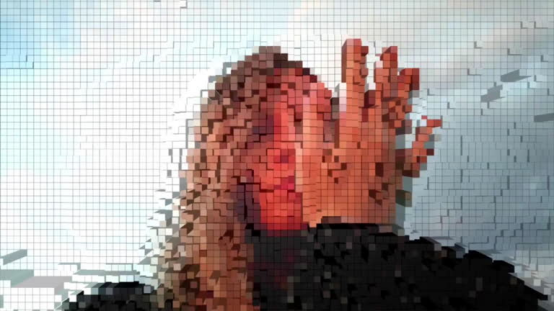
Human perception is not a passive recording of the environment; it is an active, interpretative process. One of the most fascinating manifestations of this is pareidolia—the psychological phenomenon where the brain perceives meaningful patterns, specifically faces, in random stimuli. This is not a malfunction, but an evolutionary survival mechanism.
The Evolutionary Advantage of Detecting Faces
Our ancestors lived in environments where distinguishing a predator from a shadow was a matter of life and death. The brain developed a “better safe than sorry” heuristic, prioritizing the identification of facial structures above all else.
- Hyper-sensitive Detection: The fusiform face area (FFA) in the brain is specialized for recognizing facial features, often firing before we consciously register what we are looking at.
- Social Survival: Recognizing expressions allowed early humans to gauge intent, threat levels, and social cohesion within groups.

The Science of Color: From Photons to Neural Interpretation
Color is not an inherent property of objects; it is a construction of the human brain. Light waves hit the retina, where photoreceptors (cones) translate these wavelengths into electrical signals. These signals are then processed by the visual cortex to create the experience of “color.”
The Spectrum of Human Vision
The human eye is limited to the visible spectrum, yet the brain interprets these limited inputs with remarkable complexity. Factors such as ambient lighting, neighboring colors (simultaneous contrast), and individual biological variation change how we perceive the same object.
| Photoreceptor | Function | Sensitivity |
|---|---|---|
| S-Cones | Short wavelengths | Blue light |
| M-Cones | Medium wavelengths | Green light |
| L-Cones | Long wavelengths | Red light |

Neural Plasticity and the Processing of Inverted Vision
The human brain displays an astounding degree of neuroplasticity, the ability to reorganize itself in response to new sensory experiences. A classic example is the adaptation to inverted vision.
Adapting to a Flipped World
When subjects wear prism glasses that flip their field of vision upside down, the brain initially struggles with extreme disorientation. However, within a few days, the brain begins to remap spatial relationships. This highlights that our “normal” view of the world is merely a learned model, not an absolute truth.
Myths and Realities: The 10 Percent Brain Capacity Fallacy
A pervasive urban legend suggests that humans only use 10% of their brains. Neuroscience has thoroughly debunked this through fMRI and PET scanning technologies.
Why the Brain is Always Active
Even during sleep, the brain maintains high levels of activity. The “10% myth” likely persists because it is an appealing metaphor for untapped human potential, but it ignores the biological reality of energy consumption.
- Metabolic Cost: The brain consumes roughly 20% of the body’s energy while accounting for only 2% of body mass.
- Neural Efficiency: Evolution would never select for an organ that is 90% redundant; the brain is highly optimized for constant, integrated function.
Frequently Asked Questions (FAQ)
- Q1: Why do we see faces in inanimate objects like clouds or toast?
- This is called pareidolia. Our brains are hardwired to prioritize face detection as a survival mechanism, causing us to over-interpret random patterns to ensure we don’t miss a real person or predator.
- Q2: Is color perception the same for everyone?
- No. Variations in cone density, genetic conditions like color blindness, and even cultural background can lead to subtle differences in how individuals perceive and name colors.
- Q3: Can the brain really adapt to seeing everything upside down?
- Yes. Studies involving prism goggles show that the brain can “re-calibrate” the visual field, allowing the wearer to interact with the world normally after the brain successfully re-maps the inverted input.
- Q4: If the 10% brain myth is false, how much do we actually use?
- We use 100% of our brain over the course of a day. Different regions are responsible for different tasks, and brain imaging shows that even simple actions require complex, multi-regional activation.