Understanding the Substantia Nigra and Dopaminergic Neurons
Parkinson’s disease (PD) is fundamentally characterized by the progressive death of specific brain cells, but to understand the “what,” we must first explore the “why” and “where.” The epicenter of this neurodegenerative earthquake lies deep within the midbrain, in a region known as the substantia nigra pars compacta. This darkly pigmented area is the primary factory for dopamine, a crucial chemical messenger responsible for relaying signals that coordinate smooth, voluntary muscle movements.
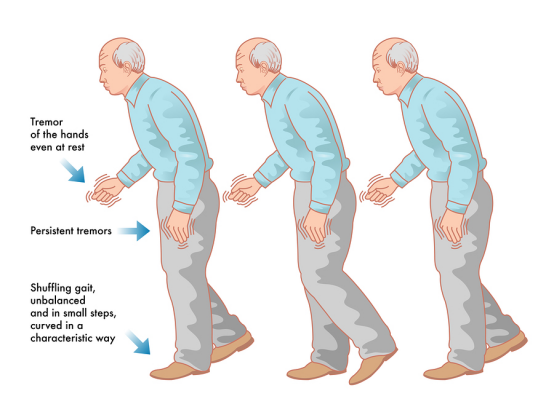
When these dopaminergic neurons begin to degenerate, the brain’s ability to transmit motor commands is severely compromised. Symptoms such as resting tremors, bradykinesia (slowness of movement), and rigid muscles do not typically manifest until approximately 60% to 80% of these specific neurons have already been lost. This significant delay highlights the brain’s remarkable, yet ultimately finite, capacity to compensate for structural damage.
The Role of the Basal Ganglia
Dopamine produced in the substantia nigra travels to the basal ganglia, a complex network of subcortical structures. Here, dopamine acts on two distinct pathways: the direct pathway, which facilitates movement, and the indirect pathway, which inhibits it. The loss of dopamine tips the scales, resulting in an overactive indirect pathway and an underactive direct pathway. This biochemical imbalance is the mechanical reason behind the profound motor deficits experienced by patients.

Alpha-Synuclein and Lewy Body Formation
While the loss of dopamine explains the symptoms, the microscopic hallmark of Parkinson’s disease explains the cellular death. Upon autopsy, the brains of PD patients consistently reveal abnormal protein aggregates known as Lewy bodies. The primary structural component of these toxic clumps is a misfolded version of a protein called alpha-synuclein.
In a healthy brain, alpha-synuclein is abundant and plays a helpful role in maintaining the supply of synaptic vesicles in presynaptic terminals. However, in Parkinson’s disease, genetic mutations, environmental toxins, or oxidative stress cause this protein to misfold. These misfolded proteins become “sticky,” clumping together to form oligomers, and eventually, dense fibrillar Lewy bodies. These structures disrupt cellular functions, choke intracellular transport, and ultimately trigger apoptosis (programmed cell death).
Protein Misfolding Explained
Recent pathological models, such as the Braak staging hypothesis, suggest that this misfolding process may act somewhat like a prion disease. The toxic alpha-synuclein proteins can travel from neuron to neuron, spreading the pathology from the peripheral nervous system (such as the gut or olfactory bulb) up into the brainstem, and eventually into the cerebral cortex. This explains why many patients experience loss of smell or severe constipation years before any motor symptoms appear.
| Cellular Feature | Healthy Neuron | Parkinsonian Neuron |
|---|---|---|
| Alpha-Synuclein State | Soluble, aids in synaptic vesicle transport | Misfolded, insoluble, forms toxic aggregates |
| Dopamine Production | Optimal synthesis via Tyrosine Hydroxylase | Severely reduced due to enzyme degradation |
| Mitochondrial Function | Efficient energy (ATP) production | Dysfunctional, high oxidative stress |
| Lysosomal Clearance | Effectively clears cellular waste | Impaired, leading to protein buildup |
The Collapse of the Neurotransmitter Network
A common misconception is that Parkinson’s disease is exclusively a dopamine-deficiency syndrome. In reality, the neurodegenerative process is far more expansive, leading to the collapse of multiple neurotransmitter networks. As the disease progresses, the pathology spreads beyond the substantia nigra to affect other critical brainstem nuclei, causing a cascade of systemic failures.
This widespread network collapse is the primary driver behind the debilitating non-motor symptoms of Parkinson’s disease, which drastically reduce the patient’s quality of life and are often more challenging to treat than the motor symptoms themselves.
Beyond Dopamine: Serotonin and Acetylcholine
The degeneration of the raphe nuclei leads to a profound depletion of serotonin, directly correlating with the high rates of clinical depression, anxiety, and sleep disturbances seen in PD patients. Simultaneously, the loss of cholinergic neurons in the nucleus basalis of Meynert results in a drop in acetylcholine, which is heavily implicated in the cognitive decline and dementia that frequently occur in the later stages of the disease.
- Dopamine: Loss causes tremors, rigidity, and bradykinesia.
- Serotonin: Depletion leads to mood disorders, depression, and altered pain perception.
- Norepinephrine: Reduction causes orthostatic hypotension (blood pressure drops) and severe fatigue.
- Acetylcholine: Imbalance contributes to cognitive impairment, memory loss, and executive dysfunction.
Expert Advice and Future Therapeutic Trends
Managing the complex pathology of Parkinson’s disease requires a proactive, multi-disciplinary approach. Because the disease involves a multi-system neurotransmitter collapse, relying solely on dopamine replacement therapy (like Levodopa) is insufficient for long-term care. Modern therapeutic strategies are increasingly focusing on neuroprotection and disease modification rather than mere symptom management.
Pro Tips for Disease Management
Experts recommend integrating vigorous, neuro-plasticity-inducing physical exercise early in the diagnosis. Exercise has been shown to increase the expression of brain-derived neurotrophic factor (BDNF), which may help protect surviving dopaminergic neurons. Additionally, patients should work closely with a movement disorder specialist to carefully titrate medications, minimizing the risk of levodopa-induced dyskinesia while maximizing “on” time. Future trends are heavily focused on monoclonal antibodies targeting alpha-synuclein clearance and gene therapies aimed at restoring enzyme function within the basal ganglia.
Frequently Asked Questions (FAQ)
- What is the fundamental cause of dopaminergic neuron death in Parkinson’s?
- While the exact trigger remains idiopathic (unknown) in most cases, it is believed to be a combination of genetic susceptibility and environmental factors that lead to mitochondrial dysfunction, oxidative stress, and the toxic accumulation of misfolded alpha-synuclein proteins.
- Why do motor symptoms only appear after significant neuron loss?
- The brain possesses a high degree of neuroplasticity. Surviving dopaminergic neurons can upregulate their dopamine production, and target receptors can become more sensitive to compensate for the loss. Symptoms only manifest when this compensatory threshold is breached.
- Can Parkinson’s disease be diagnosed through a blood test?
- Historically, PD has been a clinical diagnosis based on neurological exams. However, recent breakthroughs in biomarker research, such as the alpha-synuclein seed amplification assay (SAA) using spinal fluid, are paving the way for highly accurate biochemical diagnostic tools.
- How do Lewy bodies affect brain function?
- Lewy bodies physically obstruct intracellular transport systems, damage mitochondria, and disrupt the normal clearance of cellular waste. This toxic environment prevents the neuron from functioning and ultimately triggers premature cell death.
- Why is Levodopa used instead of pure dopamine?
- Pure dopamine cannot cross the blood-brain barrier. Levodopa (L-DOPA) is a precursor amino acid that can successfully cross into the brain, where surviving neurons convert it into usable dopamine to temporarily restore motor control.