Plants, the silent architects of our ecosystems, harbor a complex array of cellular processes that underpin their growth, survival, and reproduction. Far from being passive organisms, they possess sophisticated internal systems for nutrient distribution and genetic propagation. At the heart of these vital functions lie two critical cellular components: the phloem system, responsible for the efficient transport of synthesized sugars and other organic molecules, and pollen mother cells, the genetic custodians initiating the next generation. Understanding these intricate mechanisms provides profound insight into the resilience and diversity of plant life, revealing the microscopic wonders that sustain global biodiversity and food webs.
The Phloem System: Plant’s Superhighway for Nutrient Transport
The phloem is a living tissue in vascular plants that transports soluble organic compounds, primarily sugars, from leaves (where they are produced during photosynthesis) to other parts of the plant where they are needed for growth or storage. This process, known as translocation, is essential for every aspect of plant physiology, ensuring that energy and building blocks reach roots, fruits, flowers, and developing tissues. Without a fully functional phloem system, a plant cannot distribute the products of photosynthesis effectively, leading to stunted growth, reproductive failure, and ultimately, death.
Anatomy of the Phloem: Sieve Elements and Companion Cells
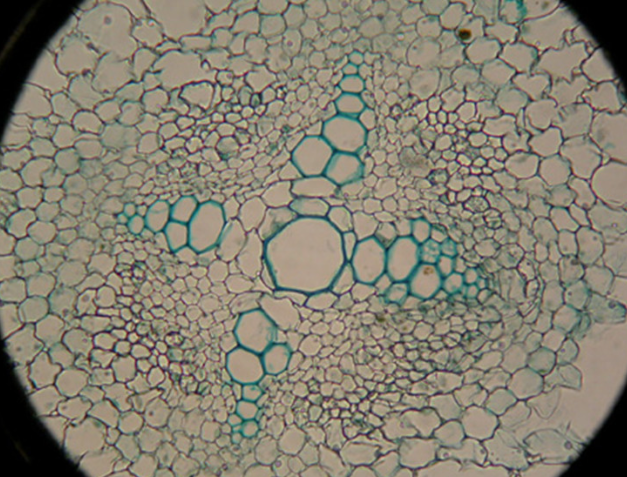
The phloem tissue is a marvel of biological engineering, composed of several specialized cell types working in concert. The primary conduits for transport are the sieve elements, which are elongated, living cells that form continuous tubes. Unlike typical plant cells, mature sieve elements lack a nucleus, ribosomes, and several other organelles, creating an open pathway for sap flow. Their end walls are perforated, forming sieve plates, which facilitate the passage of materials. Adjacently situated are the companion cells, which are metabolically active and retain a full complement of organelles. These cells play a crucial role in supporting the sieve elements, providing them with proteins, ATP, and regulating the loading and unloading of sugars. In addition to these primary components, phloem also contains phloem parenchyma cells for storage and phloem fibers for structural support, completing a robust and efficient transport network.
Mechanism of Phloem Trafficking: The Pressure Flow Hypothesis
The movement of substances through the phloem is best explained by the pressure flow hypothesis, also known as the mass flow hypothesis. This model describes a bulk flow driven by a pressure gradient, much like water flowing through a hose. The process begins at a “source,” typically a leaf where sugars (primarily sucrose) are produced. Here, sucrose is actively loaded into the sieve elements, often with the help of companion cells, a process that requires energy. This increase in solute concentration within the sieve tube lowers its water potential, causing water to move by osmosis from adjacent xylem vessels into the sieve tube. The influx of water increases the turgor pressure within the sieve element at the source. Conversely, at “sinks” – such as roots, fruits, or growing buds – sugars are actively unloaded from the sieve elements for consumption or storage. This removal of solutes raises the water potential, causing water to move out of the sieve tube and back into the xylem. The resulting difference in turgor pressure between the source and the sink drives the mass flow of phloem sap through the sieve tubes, effectively transporting nutrients throughout the plant. This continuous cycle ensures that energy reserves are efficiently relocated to where they are most needed, supporting diverse metabolic activities across the plant body.
The Critical Role of Phloem in Plant Growth and Survival
The phloem’s function extends far beyond simple sugar transport; it is integral to virtually every aspect of a plant’s life cycle. By distributing sugars (carbohydrates) produced in the leaves, phloem provides the necessary energy and carbon skeletons for cellular respiration and the synthesis of new biomolecules in non-photosynthetic parts. This includes fueling the rapid growth of root tips, the development of new leaves and stems, and the maturation of flowers, fruits, and seeds. Phloem also transports essential amino acids, hormones, and signaling molecules, which regulate growth, developmental responses, and communication between different plant organs. For instance, plant hormones like auxins and cytokinins, crucial for cell division and differentiation, are translocated via the phloem. Furthermore, during times of stress or dormancy, phloem plays a vital role in mobilizing stored reserves (e.g., starch in roots or tubers) to support renewed growth. The efficiency of phloem trafficking directly impacts agricultural productivity, as it determines how effectively crops can allocate resources to economically valuable parts like grains or fruits, making it a key target for improving yield in modern agriculture.

Pollen Mother Cells: Architects of Plant Reproduction
While the phloem ensures the physical sustenance of the plant, pollen mother cells are the biological architects of its future. These specialized cells are central to sexual reproduction in flowering plants (angiosperms) and conifers (gymnosperms). They undergo a unique process of cell division, meiosis, to produce haploid pollen grains, which are the male gametophytes. This intricate journey from a diploid mother cell to a genetically diverse haploid pollen grain is a fundamental step in the life cycle of seed plants, ensuring genetic variation and the continuation of the species. The precision and regulation of these cellular events are critical for successful fertilization and seed formation, which are the basis for plant propagation and the perpetuation of plant lineages across generations.
Origin and Development of Pollen Mother Cells (Microsporocytes)
Pollen mother cells, technically known as microsporocytes, originate within the anthers of flowering plants. The anther is part of the stamen, the male reproductive organ of a flower. Inside the anther, specialized tissue called the sporogenous tissue differentiates to form numerous diploid microsporocytes. These cells are typically large, with dense cytoplasm and prominent nuclei, preparing them for the intense genetic reorganization that is about to occur. The development of these cells is tightly regulated by genetic programs and environmental cues, ensuring that they are ready to embark on meiosis at the appropriate stage of flower development. Each microsporocyte is a diploid (2n) cell, containing two sets of chromosomes, one from each parent. Their specific environment within the microsporangium (pollen sac) of the anther provides the necessary nutrients and protective layers for their crucial developmental journey.
Meiosis: The Genetic Foundation of Pollen Formation
The most defining characteristic of pollen mother cells is their capacity to undergo meiosis, a specialized type of cell division that reduces the chromosome number by half and generates genetic diversity. Meiosis proceeds in two distinct stages: Meiosis I and Meiosis II.
- Meiosis I (Reductional Division):
- Prophase I: Chromosomes condense, homologous chromosomes pair up (synapsis) to form bivalents, and crossing over occurs, exchanging genetic material between non-sister chromatids. This is a crucial event for genetic recombination.
- Metaphase I: Homologous pairs align at the metaphase plate.
- Anaphase I: Homologous chromosomes separate and move to opposite poles, but sister chromatids remain attached.
- Telophase I: Chromosomes decondense, and the cell divides into two haploid (n) cells, each with replicated chromosomes.
- Meiosis II (Equational Division):
- Prophase II: Chromosomes condense again.
- Metaphase II: Sister chromatids align at the metaphase plate in each of the two cells.
- Anaphase II: Sister chromatids separate and move to opposite poles.
- Telophase II: Chromosomes decondense, and each cell divides, resulting in a total of four haploid cells.
These four haploid cells are initially called microspores. Each microspore then undergoes mitosis to develop into a mature pollen grain, which typically contains two cells: a large vegetative (tube) cell and a smaller generative cell. The generative cell will later divide to form two sperm cells, which are the actual male gametes. This two-stage meiotic process ensures that the resulting pollen grains are genetically unique and contain half the number of chromosomes as the parent plant, ready for fertilization.
The Indispensable Role of Pollen in Plant Fertilization
Pollen grains are the vehicles for male gametes in seed plants, making their role in fertilization absolutely indispensable for plant reproduction and genetic continuity. Once mature, pollen grains are dispersed from the anther through various mechanisms, including wind, water, and animal vectors (e.g., insects, birds). The successful transfer of pollen from the anther to the receptive stigma of a flower is known as pollination. Upon landing on a compatible stigma, the pollen grain germinates, absorbing moisture and nutrients. The vegetative cell develops into a pollen tube, which grows down through the style towards the ovule, guided by chemical signals. The generative cell travels down the pollen tube and divides (if it hasn’t already) to form two sperm cells. In flowering plants, a unique process called double fertilization occurs: one sperm cell fuses with the egg cell to form a diploid zygote, which develops into the embryo, while the other sperm cell fuses with the central cell to form a triploid endosperm, which provides nourishment for the developing embryo. This intricate dance of cellular fusion ensures not only the formation of a new plant but also the provision of its initial food supply, highlighting the critical and complex role of pollen in perpetuating plant life and maintaining genetic diversity within plant populations.

Interconnectedness: How Transport Systems Fuel Reproduction
While phloem trafficking and pollen formation are distinct cellular processes, they are profoundly interconnected within the holistic life cycle of a plant. The efficient operation of the phloem system directly supports the energy-intensive demands of reproduction, ensuring that the resources necessary for creating new life are delivered precisely where and when they are needed. This synergistic relationship underscores the plant’s remarkable ability to coordinate its physiological functions for optimal growth and propagation, demonstrating how seemingly separate cellular activities are part of a larger, integrated biological strategy. The success of a plant in producing viable seeds and fruits is a testament to the seamless collaboration between its transport and reproductive systems.
Energy Demands of Reproduction
Plant reproduction, from the development of flowers and pollen to the maturation of fruits and seeds, is an extraordinarily energy-intensive process. The formation of pollen grains, for instance, requires significant metabolic investment for meiosis, subsequent mitotic divisions, and the synthesis of complex cell wall components. Similarly, the development of ovules, the growth of the pollen tube, and especially the production of nutrient-rich seeds and fruits, demand a substantial supply of sugars, amino acids, and other organic compounds. The phloem system serves as the critical conduit for transporting these vital resources from photosynthetic “source” organs (like mature leaves) to the reproductive “sink” organs (flowers, developing fruits, and seeds). Without a robust and efficient phloem, the plant would be unable to meet these high energy demands, leading to reduced fertility, smaller yields, or even complete reproductive failure. This highlights how the success of a plant’s reproductive strategy is fundamentally reliant on the effectiveness of its nutrient transport infrastructure.
Hormonal Signaling and Nutrient Allocation
Beyond bulk nutrient transport, the phloem also plays a crucial role in the long-distance signaling that coordinates reproductive development. Plant hormones, such as auxins, gibberellins, cytokinins, and florigen (a flowering hormone), are transported through the phloem and act as key messengers, influencing processes like flowering time, flower development, and fruit set. For example, the perception of photoperiod in leaves triggers the synthesis and phloem-mediated transport of florigen to the apical meristem, initiating the transition from vegetative growth to reproductive growth. Moreover, the phloem system is central to the plant’s ability to prioritize nutrient allocation, especially when resources are limited. Reproductive organs often become strong physiological “sinks,” drawing a disproportionate share of sugars and other metabolites from the phloem, sometimes at the expense of vegetative growth. This strategic allocation ensures that the most critical functions for species survival – reproduction – are adequately resourced, even under challenging environmental conditions. The interplay between hormonal signals and nutrient flow through the phloem orchestrates the precise timing and success of the entire reproductive cycle.

Advanced Insights into Plant Cell Trafficking and Reproduction Strategies
Modern plant biology continues to unravel the deeper complexities of phloem function and reproductive mechanisms, pushing the boundaries of our understanding. Advanced research employs sophisticated techniques to investigate the molecular machinery governing nutrient transport and the evolutionary adaptations that have shaped diverse reproductive strategies. These ongoing discoveries not only deepen our appreciation for the intricate cellular world of plants but also hold immense potential for agricultural innovation, allowing us to develop more resilient and productive crops. By scrutinizing the subtleties of these processes, scientists are gaining insights that could address global food security and environmental challenges, demonstrating the practical implications of fundamental plant cell biology research.
Modern Research on Phloem Loading and Unloading
Contemporary research into phloem loading and unloading mechanisms has moved beyond the basic pressure flow hypothesis to explore the intricate molecular and cellular pathways involved. Scientists are differentiating between two primary pathways for sucrose loading into the sieve elements: apoplastic loading and symplastic loading. Apoplastic loading involves sucrose being released into the cell wall space (apoplast) and then actively transported into the sieve elements by specific sucrose transporters (SUTs or SUCs) located on the plasma membrane of companion cells or sieve elements. This pathway is energy-dependent and allows for fine-tuned control. Symplastic loading, on the other hand, involves sucrose moving directly from mesophyll cells to sieve elements through interconnected plasmodesmata, bypassing the apoplast. This pathway is more common in plants with specialized companion cells known as intermediary cells. Research also focuses on the role of various membrane proteins, ion gradients, and energy sources (ATP) in driving these transport processes. Understanding these detailed mechanisms is crucial for genetic engineering efforts aimed at enhancing photosynthetic efficiency and improving the allocation of sugars to desired plant parts, such as roots for biofuel production or grains for increased crop yield. Manipulating these transport systems offers a promising avenue for developing crops with improved stress tolerance and nutrient use efficiency.
Evolutionary Adaptations in Pollen Morphology and Dispersal
The vast diversity of plant species is mirrored by an astonishing array of evolutionary adaptations in pollen morphology and dispersal strategies, each finely tuned to optimize reproductive success in specific environments. Pollen grains exhibit a remarkable variety of shapes, sizes, and surface patterns (e.g., spiny, pitted, smooth, winged), which are often correlated with their dispersal mechanism. For instance, wind-pollinated plants typically produce large quantities of small, lightweight, smooth pollen grains that can be easily carried by air currents, sometimes featuring air sacs for buoyancy (e.g., pine pollen). Insect-pollinated plants, conversely, often have larger, stickier pollen with sculptured exine (outer wall) to adhere to pollinators’ bodies, sometimes with specific hooks or spines. Water-pollinated plants have specialized pollen that can remain viable underwater or float on the surface. Beyond morphology, plants have evolved sophisticated mechanisms to ensure outcrossing and prevent self-pollination, such as dioecy (male and female flowers on separate plants), monoecy (separate male and female flowers on the same plant), or self-incompatibility systems where pollen from the same plant is rejected. These adaptations highlight the dynamic interplay between plant genetics, ecology, and evolutionary pressures, showcasing how plants have continually refined their reproductive strategies to thrive in diverse habitats and perpetuate their species effectively.
Conclusion
The intricate world of plant cell biology, particularly the functions of the phloem system and pollen mother cells, reveals the profound complexity and efficiency underlying plant life. From the seamless transport of essential nutrients that fuels every cellular activity to the precise genetic choreography that ensures species propagation, plants demonstrate highly evolved mechanisms for survival and growth. The phloem acts as the plant’s internal superhighway, meticulously distributing energy and signaling molecules, while pollen mother cells serve as the indispensable genetic architects, orchestrating the creation of new life through meiosis and fertilization. These processes, though distinct, are deeply interconnected, forming a holistic system that allows plants to thrive, adapt, and sustain the planet’s ecosystems. Continued research into these fundamental cellular functions not only deepens our scientific understanding but also provides critical insights for addressing global challenges in agriculture, biodiversity, and environmental sustainability.
Frequently Asked Questions (FAQ)
- Q1: What is the primary difference between phloem and xylem?
- The primary difference lies in their function and the type of material they transport. Xylem primarily transports water and dissolved minerals from the roots upwards to the rest of the plant, driven by transpiration pull. Its main conducting cells (tracheids and vessel elements) are dead at maturity. Phloem, conversely, transports sugars (produced during photosynthesis) and other organic compounds from “source” regions (e.g., leaves) to “sink” regions (e.g., roots, fruits, growing tips) where they are used or stored. Its main conducting cells (sieve elements) are living at maturity, albeit lacking a nucleus, and their transport is driven by a pressure gradient.
- Q2: How do pollen mother cells ensure genetic diversity in offspring?
- Pollen mother cells ensure genetic diversity primarily through two key processes during meiosis: crossing over and independent assortment. During Prophase I, homologous chromosomes exchange segments of genetic material through crossing over, creating new combinations of alleles on the chromatids. During Metaphase I, the homologous chromosome pairs align randomly at the metaphase plate, meaning the maternal and paternal chromosomes are assorted independently into the daughter cells. These two mechanisms generate a vast number of unique genetic combinations in the resulting haploid microspores (and thus pollen grains), which then contribute to the genetic variability of the next generation after fertilization.
- Q3: Can a plant survive without a functioning phloem system?
- No, a plant cannot survive indefinitely without a functioning phloem system. While some parts might temporarily rely on stored reserves, the phloem is crucial for distributing the sugars produced by photosynthesis from the leaves to all non-photosynthetic parts of the plant, such as roots, developing fruits, and new shoots. Without this transport, these parts would be starved of energy and building blocks, leading to their death and ultimately the demise of the entire plant. This is why practices like “girdling” (removing a ring of bark, which contains the phloem) can kill a tree by preventing nutrient flow to the roots.
- Q4: What happens if a pollen grain lands on an incompatible stigma?
- If a pollen grain lands on an incompatible stigma (either from a different species or, in self-incompatible plants, from the same plant), several mechanisms can prevent successful fertilization. The stigma might not recognize the pollen and fail to provide the necessary signals or nutrients for germination. Alternatively, the pollen may germinate, but the pollen tube’s growth might be arrested or inhibited as it navigates the style, preventing it from reaching the ovule. These mechanisms, collectively known as incompatibility barriers, are crucial for maintaining species integrity and promoting genetic outcrossing within a population, preventing the formation of non-viable hybrids or the negative effects of inbreeding.
- Q5: How do plants prioritize nutrient allocation to reproductive organs via phloem?
- Plants prioritize nutrient allocation to reproductive organs by establishing them as powerful “sinks” that actively draw sugars and other metabolites from the phloem. This sink strength is influenced by several factors, including the high metabolic demand of developing flowers, fruits, and seeds, which actively consume sugars for growth and storage. Hormonal signals, such as auxins and gibberellins, also play a role in regulating sink strength and directing phloem flow. Specialized transporter proteins in the sink tissues actively unload sugars from the phloem, maintaining a steep concentration gradient that promotes continuous flow from source to sink. This complex interplay ensures that critical reproductive processes receive the necessary resources, even at the expense of vegetative growth.