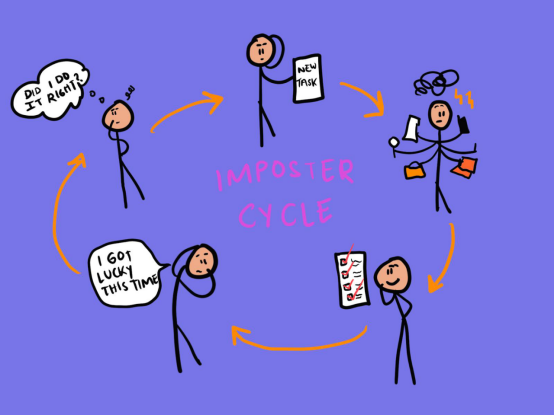
True self-confidence is often misunderstood as a loud, unwavering certainty or a byproduct of constant success. However, professional psychology and lived experience suggest that authentic confidence is far more nuanced. It is an internal state of being that allows an individual to face challenges, accept failures, and navigate the unknown without losing their sense of inherent value. Many high-achievers struggle with the opposite: a persistent feeling of being a “fraud” despite evidence of their competence. This guide provides a deep dive into the mechanisms of the mind that keep us trapped in self-doubt and offers a roadmap for transforming your relationship with yourself.
The Psychology of Imposter Syndrome and the Inner Narrative
Imposter Syndrome is not a clinical diagnosis but a psychological pattern where individuals doubt their accomplishments and have a persistent, often internalized fear of being exposed as a fraud. This phenomenon is deeply rooted in the “inner narrative”—the continuous stream of self-talk that interprets our daily experiences. When this narrative is skewed toward self-criticism, even significant achievements are dismissed as “luck” or “timing.”
Deconstructing the “Fraud” Narrative
The first step in rewriting your inner narrative is identifying the specific scripts your mind runs. These scripts often fall into categories such as the Perfectionist, the Natural Genius, or the Soloist. Each of these archetypes carries a heavy burden of unrealistic expectations. For example, the Perfectionist believes that anything less than a 100% success rate is a total failure, fueling the belief that they don’t belong in their position. By naming these patterns, you create a psychological distance between your true self and the intrusive thoughts of inadequacy.
The Impact of Cognitive Distortions
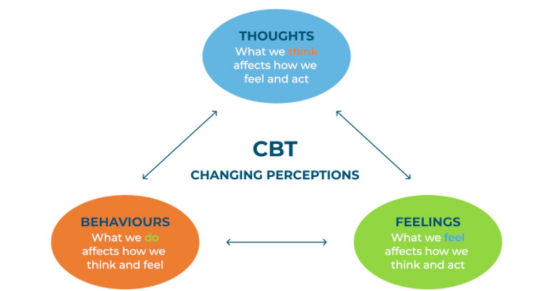
Cognitive distortions like “all-or-nothing thinking” or “disqualifying the positive” act as the fuel for imposter syndrome. When you disqualify the positive, you actively filter out evidence of your competence while magnifying minor mistakes. To counter this, one must engage in cognitive reframing—a process of identifying these distortions and replacing them with balanced, evidence-based thoughts. Instead of saying, “I only got this job because they were desperate,” a reframed thought would be, “I met the qualifications and performed well in the interview, which is why I was hired.”
Transitioning from External Validation to Unconditional Confidence
Most people build their confidence on a foundation of “conditional” factors: their job title, the balance in their bank account, or the approval of their peers. While these things feel good, they are inherently unstable. Unconditional confidence, by contrast, is a transformation that occurs when you detach your worth from these external markers. It is the realization that your value as a human being is constant, regardless of your current performance or social standing.
The Fragility of Achievement-Based Worth
When confidence is tied strictly to achievement, life becomes a “hedonic treadmill.” You achieve a goal, feel a brief surge of confidence, and then immediately feel the need to achieve something bigger to maintain that feeling. This cycle is exhausting and leaves you vulnerable to burnout and depression if you ever face a setback. Transitioning away from this requires a fundamental shift in perspective: seeing achievements as things you *do* rather than who you *are*.
Building a Core of Internal Stability
To cultivate unconditional confidence, you must develop internal anchors. These are values and personal truths that remain true even when you fail. Examples include your integrity, your capacity for kindness, or your commitment to growth. When you base your confidence on these internal qualities, external fluctuations—like a lost client or a critical comment—cannot reach the core of your self-esteem. This stability allows for a more “authentic” presence in the world, as you are no longer performing for the sake of maintaining a fragile ego.

Cultivating Resilience and Stability in Uncertain Times
Uncertainty is one of the greatest triggers for self-doubt. When the future is unclear, the mind often fills the void with “worst-case scenarios,” leading to anxiety and a loss of confidence. Genuine confidence is best tested not when things are going well, but when life is volatile. Learning to remain grounded during these periods is essential for long-term psychological health.
Embracing the “Not Knowing”
The need for certainty is a survival mechanism, but in the modern world, it can be paralyzing. Cultivating confidence in uncertainty involves leaning into the “not knowing.” Instead of trying to control every outcome, focus on your ability to respond to whatever happens. This is the difference between “I know what will happen” (false confidence) and “I know I can handle what happens” (genuine confidence). This shift reduces the pressure to be a psychic and allows you to focus on the present moment.
Consider the following strategies for maintaining stability:
- Routine as an Anchor: When external life is chaotic, maintaining a strict internal routine (meditation, exercise, journaling) provides a sense of agency.
- Micro-Wins: In times of high uncertainty, break down your goals into the smallest possible steps. Achieving these “micro-wins” provides a steady stream of dopamine and reinforces your sense of competence.
- Perspective Shifting: Ask yourself, “Will this matter in five years?” This simple question often deflates the immediate intensity of a stressful situation.

The Essential Role of Self-Love in Building Self-Belief
It is nearly impossible to maintain confidence if you do not fundamentally love and accept yourself. Many people try to “bully” themselves into being confident through harsh self-criticism and high pressure. However, true self-belief is nurtured through self-compassion. Self-love provides the safety net that allows you to take risks; you know that even if you fail, you will still treat yourself with kindness.
The Difference Between Self-Esteem and Self-Compassion
While self-esteem is often evaluative (how good am I?), self-compassion is relational (how do I treat myself?). Research suggests that self-compassion is a more stable predictor of mental health than self-esteem. When you lack confidence, the “self-love” approach involves acknowledging your suffering without judgment. Instead of saying “I’m a failure because I’m nervous,” you say, “I’m feeling nervous right now, and that’s okay. Anyone in my position would feel this way.”
Practical Steps for Self-Acceptance
Self-love is a practice, not a destination. It involves daily choices that honor your needs and boundaries. For those lacking confidence, this might mean practicing saying “no” to things that drain you, or carving out time for activities that bring you joy without being “productive.” By treating yourself as someone worth caring for, you gradually convince your subconscious that you are indeed valuable, which is the bedrock of authentic confidence.

Practical Exercises for Rewriting Your Internal Dialogue
Changing a lifelong habit of self-doubt requires consistent effort and practical tools. You cannot simply “think” your way into a new narrative; you must actively engage in exercises that rewire your neural pathways. Below are several methods to facilitate this transformation.
The Evidence Journaling Technique
To combat the “fraud” feeling, maintain an Evidence Journal. Every day, write down three things you did well, no matter how small. More importantly, write down the *skill* or *quality* you used to achieve it.
| Action Taken | Internal Quality Demonstrated | Resulting Evidence |
|---|---|---|
| Completed a difficult report | Analytical thinking and persistence | I am capable of handling complex tasks. |
| Had an uncomfortable conversation | Courage and clear communication | I can advocate for my needs. |
| Learned a new software tool | Adaptability and curiosity | I am a fast learner. |
By documenting these daily, you create a “fact sheet” that your inner critic cannot easily argue with.
The “Best Friend” Audit
When you catch yourself in a spiral of self-doubt, stop and perform an audit. Ask yourself: “Would I say these words to my best friend if they were in my situation?” Usually, the answer is a resounding no. We are often our own harshest critics. Practice speaking to yourself with the same empathy, patience, and encouragement you would offer a loved one. Over time, this softens the internal narrative and makes it more supportive.

Sustaining Long-Term Transformation and Authentic Growth
The journey from imposter syndrome to authentic confidence is not linear. There will be days when the old voices of doubt return with intensity. The goal is not to eliminate doubt entirely—fear is a natural part of the human experience—but to change your relationship with it. Authentic growth happens when you can feel the doubt and still move forward toward your values.
Integrating the “Shadow” Self
True confidence includes accepting your flaws and “shadow” sides. When you stop trying to hide your weaknesses, they lose their power over you. Vulnerability is actually a hallmark of the most confident people. By being open about what you don’t know or where you’ve failed, you remove the fear of being “found out.” You are already “out,” and you are still standing. This is the ultimate expression of authentic confidence.
The Continuous Evolution of Self
As you grow, your narrative must evolve. The confidence that served you in your 20s may not be sufficient for the challenges of your 40s. Continuous self-reflection and a commitment to learning ensure that your confidence remains dynamic. Stay curious about your own mind, continue to challenge your comfort zones, and always return to the foundation of self-love. This lifelong process ensures that your confidence is not just a temporary state, but a fundamental part of who you are.
Frequently Asked Questions (FAQ)
- Q1: Is it possible to completely get rid of Imposter Syndrome?
- While the feelings of being a “fraud” may never disappear entirely, especially when taking on new challenges, you can change your reaction to them. Instead of letting these thoughts paralyze you, you can learn to recognize them as a sign that you are pushing your boundaries and growing. With practice, the volume of these thoughts decreases, and they no longer dictate your actions.
- Q2: How is unconditional confidence different from arrogance?
- Arrogance is often a “mask” for low self-esteem; it requires looking down on others to feel superior. Unconditional confidence is quiet and internal. It doesn’t require comparison to others because it is based on your own inherent worth and values. A truly confident person has no need to prove themselves or diminish others.
- Q3: Can self-love really help if I have no reason to be confident in my skills?
- Yes, because self-love is the prerequisite for skill-building. If you don’t love yourself, every mistake you make while learning a new skill will feel like a personal indictment of your worth, making you more likely to quit. Self-love allows you to be a “beginner” and fail repeatedly without losing your drive to improve.
- Q4: What should I do when I have a “relapse” into deep self-doubt?
- First, practice self-compassion. Do not judge yourself for having doubt. Second, return to your “Evidence Journal” or list of core values. Third, take one small, manageable action toward a goal. Action is often the best antidote to the paralysis of self-doubt. Remember that one bad day does not erase the progress you have made.
- Q5: How does uncertainty affect confidence in the long run?
- If managed poorly, chronic uncertainty can lead to a “learned helplessness” where you lose faith in your ability to influence your life. However, if you use uncertainty as a training ground for resilience, it actually strengthens your confidence. You become someone who knows they can thrive in any environment, which is the most powerful form of self-belief.